"ASSATA: An Autobiography"
A book review and essay by Dow

Joanne Chesimard didn’t “fight for justice.” She murdered New Jersey State Trooper Werner Foerster in cold blood, then fled to Cuba to escape accountability. The FBI never stopped calling her what she was: a terrorist.
Kash Patel - Director of the Federal Bureau of Investigation (FBI)
Growing up, my mother emphasized learning Black history. I took a lot of that history for granted as I was learning Black history but not how our history affects the present. A period of Black History I gravitated towards were the Black Panthers. At 17 years old, I dove head first into learning about the organization and their contributions and downfall. Mostly surface level, I learned about key players but never peeled the layers back — I would say I passively consumed Black history.
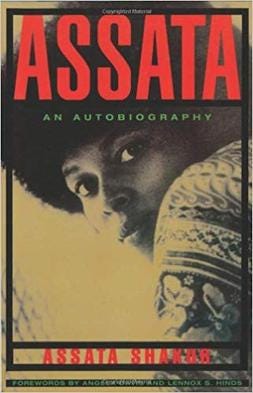
Ashamedly, I learned Shakur’s name but never knew her significance. “ASSATA: An Autobiography” peels many of those layers on who she was and what should she stood for. The autobiography centers around the 1973 New Jersey State Turnpike incident while splicing in flashbacks of Shakur’s childhood, adolescence, and her revolutionary years. Throughout the read, I found myself narrowing in on recurring themes and topics:
How severe of a culture shock was it for a Northern Black person that frequented the South during Jim Crow?
The United State’s role in attacking Black activism and Black societal collaboration.
The lack of penological studies with respect to incarcerated women.
Shakur’s experience with the various activist and revolutionary organizations reflects the general treatment of Black women in our communities. Black men weren’t fighting for their people but fighting to have a certain power over their people. Knowing a general history of the Black Panthers means you should know they did not acknowledge women’s opinions; it’s a patriarchal organization. Ultimately, that led to the downfall of the organization. Shakur touches on how those beliefs transcend race and led these pivotal movements astray. Something I appreciate from Shakur’s recount, is her overwhelming love for Black people. Even though what you read can be painful, it comes from a warm place.
The Rating
I recommend every Black person read this book if you haven’t.
I give this book an 8.9 out of 10. I appreciated learning what I learned about the turnpike incident and Shakur’s personal life. However, I felt at a certain point, the book became a pure recount of the case. Given Shakur contributed to various organizations and revolutionary movements in our country, I wanted more insight to her personal experiences regarding the Black Liberation Army. Regardless, it was a great read and I will most likely reference her story in my future learning.
The Essay
I mentioned the book made me think seriously on three topics (scroll up to refresh yourself). With those thoughts (and New Year’s Resolutions to challenge myself), I wrote an argumentative essay using the autobiography as the basis for the paper. I ask that you take some time and give it a read. I do recommend reading the novel first but not required.

Great read and essay on Assata!
I’ve been influenced to finish the autobiography! Will come back for the essay. Thanks